Hyper-personalisation: a new era in retail


Luxury brands have historically led the way when it comes to delivering personalised experiences. These retailers have excelled at weaving customisation into their offering, impressing customers with bespoke experiences, tailored, one-of-a-kind products, and highly personalised customer service, both in-store and online.
In recent years, the integration of AI has transformed the concept of personalization, allowing luxury retailers to take their personalization efforts even further. Gucci, for example, is using AI to help its team forecast fashion trends and design collections that align with evolving customer preferences. Louis Vuitton is also using AI in this way, analyzing trends, consumer behavior, and social media data to design collections. The retailer has also introduced LV Virtual Advisor, an AI-powered tool that provides personalised product recommendations and assists customers while they shop online.
This kind of advanced personalization — that leverages AI, machine learning, and data analytics — distinguishes hyper-personalization from traditional personalization. Hyper-personalization involves using advanced technology and analyzing data from various sources — such as purchase history, browsing behavior, social media activity, and real-time interactions — to personalize the customer experience in highly individualized ways. This allows retailers to anticipate and meet customer needs with remarkable precision, creating a seamless, highly relevant customer journey. This can result in deeper connections with customers, increased satisfaction and loyalty, and ultimately, higher sales.
Now, thanks to the widespread adoption of AI and data tools, mainstream retailers are also able to test out hyper-personalised journeys and offer a taste of luxury to a broader audience. Walmart is already experimenting with this, using Generative AI to enhance search capabilities and personalize the shopping experience on their app. For example, instead of having users search for several items for a party, Walmart's AI suggests items they may need, such as decorations, snacks, and drinks, catering to their individual preferences and making their shopping experience more efficient and tailored. Amazon is also embracing personalization, surfacing the most relevant products to each customer and anticipating their needs based on past purchases and preferences.
Hyper-personalization is no longer the exclusive domain of luxury brands —it is becoming an essential strategy for all retailers aiming to meet the evolving expectations of today's consumers.
While many retailers may not be able to invest quite as much into personalization as luxury or major retailers, hyper-personalization can be implemented at different touchpoints along the customer journey. For instance, retailers can target customers with unique ads that reflect their individual needs and desires. Once they click on these ads, they can be directed to a page powered by AI that dynamically tailors the content specifically to their interests, needs, and profiles, as shown in the example below.
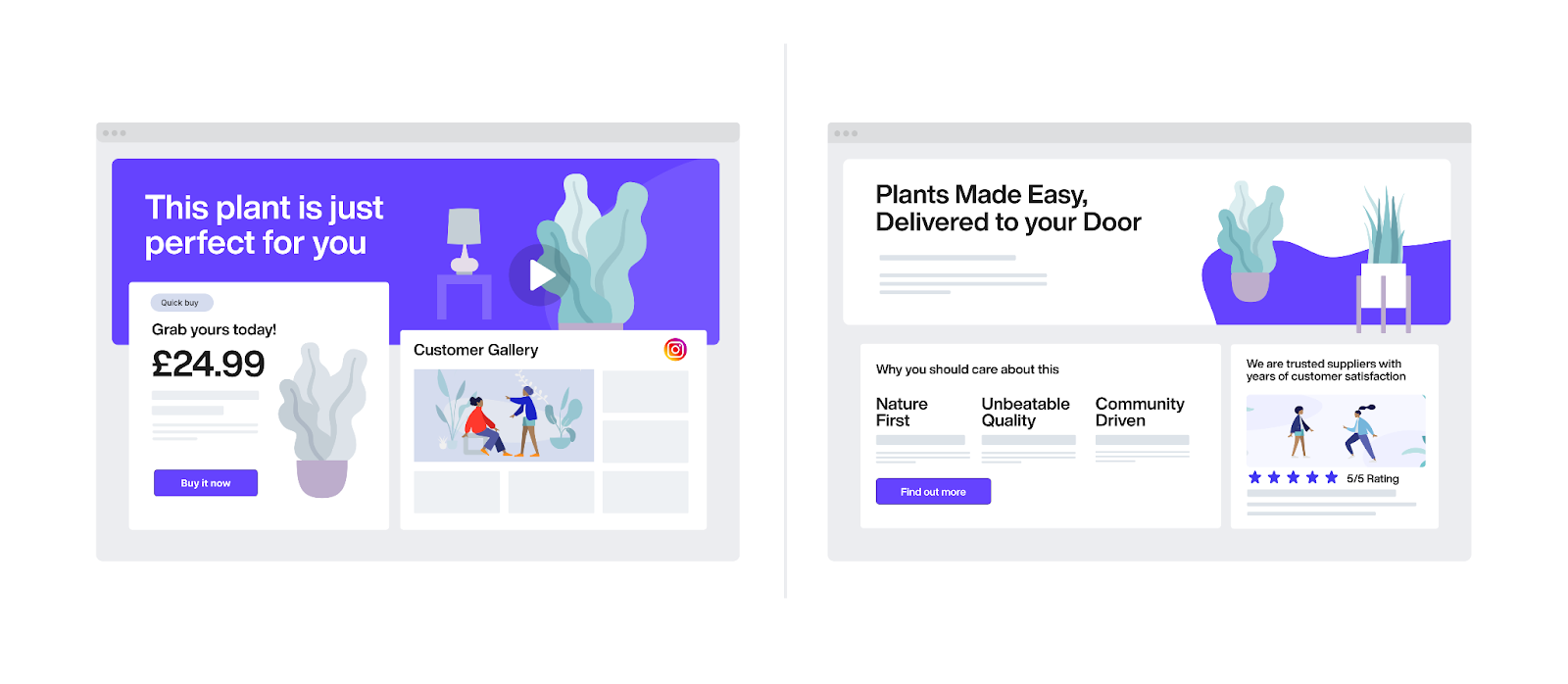
When browsing through a website, different products can also be surfaced based on the customer's profile. By analyzing previous purchase history, browsing history, and other data metrics, retailers can dynamically present the most relevant products to each customer. This ensures that customers find what they want more quickly and easily, enhancing their overall shopping experience.
Consumers are increasingly drawn to these unique, tailored shopping experiences. No longer satisfied with generic, one-size-fits-all solutions, they expect experiences that cater to their individual preferences and needs. Our latest survey findings highlight this shift, revealing that three in five consumers believe brands should be able to offer more personalised goods and services with the technology that is currently available.
As retailers strive to provide these personalised experiences, they must also address the issue of data privacy. Retailers need to have strong data protection measures in place and be open about how they handle customer data to build trust. Though some customers may be opposed to all kinds of data collection, we found that 47% of our survey respondents wished retailers had more information about them so that the products offered were better suited to their preferences. This suggests that many customers are open to sharing their data if it results in a better, more personalised and intuitive shopping experience with better recommendations.
With increased competition across the retail sector, those who can master the art of personalization are well-positioned to stand out. As AI continues to advance, hyper-personalization will become increasingly easier to implement and will eventually become an expected part of the customer experience. For now though, hyper-personalization is setting a new standard in CX and signaling a new era in retail, offering customers uniquely tailored experiences that go beyond their expectations.
This article was originally published on 22 July 2024.
Keep reading
More news and articles
Insights on technology, AI, security, and all that’s next.