Raise the ceiling: Beyond's takeaway from Figma Config 2026
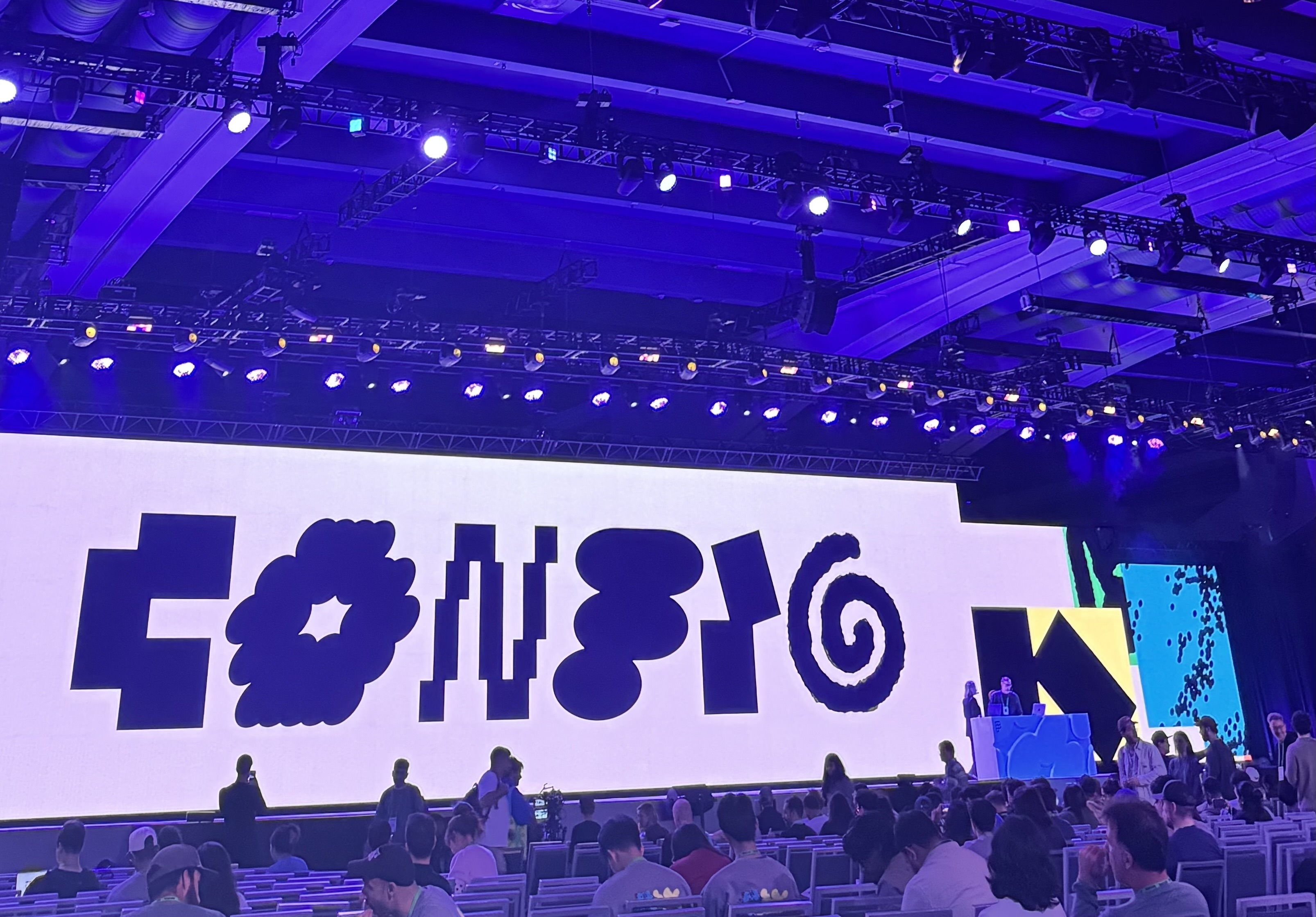


"AI can lower the floor, [but] it's up to all of you to raise the ceiling." Those were the words of Figma’s CEO, Dylan Field, at this year’s Config event and they left an impression. You see, in a world where it’s never been easier to ship, the floor now belongs to everyone — and we’d argue that's exactly why great design has never mattered more.
Speedy shipping is supercharging slop
The most consequential shift at Config wasn't about speed — it was about who ships. Generative plugins, shaders, motion, and design agents now let a PM, an engineer, or a marketer turn an idea into a working prototype in an afternoon. As a company, Figma's ambition is clear: to be the only tool you need to go from a blank canvas to a production-ready digital product — and to make that possible for everyone in the building, not just the designer.
But while democratized design is an inherently good thing, it brings with it some new challenges. As Airbnb's VP of design, Teo Connor, put it: “just because you can make it doesn't mean you should.” Her prediction was blunt — we are about to spend a stretch swimming in an outsized wave of mediocre, vibe-coded, good-enough work.
The easy path for any executive right now is to see AI as a cost lever: fewer designers, faster timelines, good enough shipped faster. Some will take it. Their customers will feel it. The harder call (and the more defensible one) is to look at this moment and decide that your organization is going to be defined by what it refuses to ship, not just what it can.
When output is infinite, craft becomes the scarcest thing
The design industry has settled into a comfortable narrative: taste is what AI can't replicate, therefore taste is what designers must protect. It's a nice line, but it’s also incomplete.
The problem with stopping at taste is that anyone can have it. Taste is recognition; the ability to know good when you see it. That's not nothing, but it's also not rare, and it's certainly not what separates a design team from a PM with a strong opinion and a prototyping tool.
What is rare, and what AI genuinely can't replicate, is craft: the discernment to know how to apply taste so it actually lands for the product, the customer, and the business. Craft is knowing which 5% to sweat and which to leave alone. It's understanding that the ‘right’ answer changes depending on context, constraint, and who's on the other end. Taste tells you something is wrong. Craft is what fixes it in a way that holds up at scale, under deadline pressure, and across a thousand edge cases nobody thought to name. That gap between recognizing quality and reliably producing it is where designers earn their place.
But the industry needs to get more precise about where craft actually gets spent — because that’s what will ultimately continue to raise the ceiling. The eval and research leaders at Config put a version of the same argument in bolder terms: The hard part of AI was never generating the output: it's defining whether the output is good, and then steering toward it, again and again, as the bar moves. "AI doesn't know where it's going. It only knows where we've been. Someone has to point it forward. That someone is us."
The tools can imitate taste. They can't exercise judgment.
So yes, equip your teams with the tools Config unveiled, but also notice what they don't solve. Figma's own Noah Levin, VP of Design, framed leadership in the AI era around three goals — speed, direction, differentiation — and was clear about which one is hardest: direction. When every idea can become a polished prototype overnight, the bottleneck isn't production. It's deciding what deserves to exist, and holding it to a standard worth your customer's attention.
The temptation to use AI's speed to compress timelines is exactly the wrong instinct. When AI lets a team move faster, the reflex is to ship sooner. The better move is to use that time for more craft, more iteration, more quality. AI doesn't change what good design requires — it changes how much room you have to find it.
This is precisely where a design partner earns its place. Beyond is an accountability mechanism — the customer's representative in the room when the org's own gravity is pulling it away from them. We're the partner who asks harder questions about what "done" actually means, who pushes past good enough to something worth shipping with pride.
The differentiator hiding in plain sight
The most encouraging thing is that the differentiator isn't exotic. Craft transforms good design into great design — and that's something all of us can understand, feel, and recognize when we see it. What this moment really requires is a mindset shift; one where we no longer settle for what can be achieved at the universal floor, and instead use our craft to question, push, and redefine what’s possible at that harder-to-reach ceiling.